
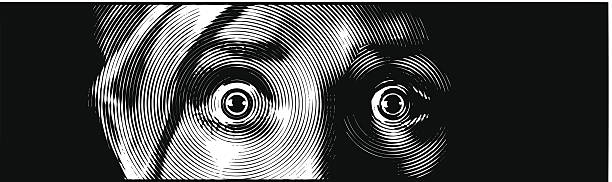
When most people think about sin, they picture immoral actions such as lying, stealing, or killing. But Christ taught us that sin actually originates in the heart and the Bible teaches that our thoughts control our lives in Proverbs 4:23 “Keep thy heart with all diligence; For out of it are the issues of life.” Here, the “heart” refers to the mind or soul, the part of a person that directs thoughts, emotions, and actions. Jesus reinforces this in Mark 7:18-23 and Matthew 15:11, where He explains that it is not what goes into a man that defiles him, but what comes out of his heart. This means that what we say (the manifestation of our thoughts) is what causes destruction upon us.
Sin stems from our inner thoughts and intentions, which eventually lead to actions. The same is true for cowardice. Cowardice, by definition, is the failure to do what is right out of fear or lack of courage. Cowards are people who want courage to meet danger; a timid or pulliaminous person. Note how the definition says that cowards want courage to meet danger. This is important because bravery is born from those who take courage. Courage is to be snatched, harvested, manifested. However cowardice is born out of timidity, hesitancy, lack of determination and resolve. Cowardice by nature doesn’t take that which is not essential for self preservation or that which is not given. The definition of the word coward is to be timid; fearful: destitute of courage.
Something interesting that has happened in modern times is that right and wrong have swapped places in the societal arena. This is why it may seem preposterous to the non-Christian that God finds cowardice to be a sin. But God is truth and all his ways are justice. Cowardice is an issue of justice. From a surface level perspective it would seem hard to find someone guilty of “doing nothing” which is usually the performance of cowards. But we do have a word for this and that is negligence. A negligent person is a person who is accustomed or apt to omit to do what ought to be done. Ought is an important word here because it implies a moral conscience of right and wrong. A negligent person can be described as someone who is careless, heedless, regardless. A coward is one who doesn’t do what they ought to do out of fear for self preservation. The reason God finds this to be a sin is not just because the coward is not doing what they ought but it is because of the effect that the coward’s non-action has on the environment around them. Cowards leave voids in the spaces around them and when a vacuum is present something must come to fill that void, whether good or bad. The Bible says in Proverbs 25:26 “A righteous man falling down before the wicked Is as a troubled fountain, and a corrupt spring.” This is to say that good people who don’t stand strong against evil are like springs of water that have been polluted or pools of water that have turned dirty or muddy. When cowards fail to stand firm against evil, they leave voids that invite chaos and destruction.
In fact, Revelation 21:8 includes cowards in a list of those whose actions lead to spiritual ruin: “But the fearful, and unbelieving, and the abominable, and murderers, and whoremongers, and sorcerers, and idolaters, and all liars, shall have their part in the lake which burneth with fire and brimstone: which is the second death.” The first type of person listed are the fearful, or in other words, the cowards. This demonstrates how seriously God views cowardice. To be afraid alone is not in itself a sin, nor is being afraid alone considered cowardice either. Rather, cowardice is the expression of fear which acts as discouragement to its surrounding environment. Consider Deuteronomy 20:8 where leaders sent home anyone fearful in battle: “What man is there that is fearful and fainthearted? Let him go and return unto his house, lest his brethren’s heart faint as well as his heart.” Fear is an emotion or emotional state, but cowardice is the expression of this fear in a manner that leads one to omit doing what they ought to do and its goal is to discourage.
The purpose of these announcements to the soldiers before battle were to prune the army of those unable to do what they ought to in the face of fear. Not only would they pose as burdens to their fellow men during the time of fighting, but their attitudes and anxieties could spread to the others compromising the effectiveness of the army. It isn’t to say that these cowardly soldiers would overtly try to discourage their brethren, but the purpose of cowardice is to prohibit one from acting righteously and more broadly, its goal is to discourage. Fear is contagious, and cowardice has the potential to demoralize entire communities.
To fully grasp the entire impact that cowardice has, we have to first understand courage. Cowardice is recognizable upon observation. But it is only fully understood when in contrast to courage. Courage is bravery (undaunted spirit; heroism; gallantry). It is intrepidity (fearless bravery in danger; fearlessness; undaunted courage with boldness). Courage is that quality of mind which enables men to encounter danger and difficulties with firmness or without fear or depression. It is valor; boldness; resolution. In contrast, cowardice is the quality of mind which disables men to encounter danger and difficulties with firmness or without fear or depression. Instead, cowardice uses fear to control the actions of the individual, usually rendering them paralyzed from making any choices or carrying out any action. Let’s compare and contrast some instances of courage and of cowardice in the Bible.
Biblical Examples Of Courage & Cowardice
The Bible provides many examples of courage and cowardice. David is a prime example of a courageous man. When Goliath threatened the Israelites, David boldly volunteered to face him, saying in 1 Samuel 17:45, “Thou comest to me with a sword, and with a spear, and with a shield: but I come to thee in the name of the Lord of hosts, the God of the armies of Israel, whom thou hast defied.” David’s faith in God gave him the courage to do what was right, even when others were afraid.
In contrast, Jonah is an example of cowardice. When God commanded him to go to Nineveh and preach God’s impending judgement, Jonah fled because he feared their reaction. His disobedience caused a storm that endangered everyone on the ship with him. Jonah’s story shows how cowardice leads to greater harm, even when it is rooted in fear. Although Jonah eventually obeyed God, his initial cowardice damaged his credibility and left him bitter. Because Jonah had a cowardly spirit and he had to be forced to do God’s will, he ended up losing his good name. He told Nineveh that they would be destroyed. But God didn’t destroy them because they chose to repent. Jonah looked like a liar and this caused him to become extremely bitter and angry. In fact, the way the Bible ends his story is with him vowing to be bitter and angry until he dies. Jonah 4:9 “And God said to Jonah, Doest thou well to be angry for the gourd? And he said, I do well to be angry, even unto death.”
Proverbs 24:11-12 warns against standing idly by when others are in danger: “If thou forbear to deliver them that are drawn unto death, and those that are ready to be slain; If thou sayest, Behold, we knew it not; doth not he that pondereth the heart consider it? and he that keepeth thy soul, doth not he know it? and shall not he render to every man according to his works?” Cowardice stems from self-preservation, whether motivated by fear, selfishness, or societal pressure. Cowards justify inaction or make excuses, but God judges the heart. Someone who chooses not to help is a coward because they are neglecting to do what they ought to do. Something to understand is that cowardice is not always motivated by fear, more specifically, cowardice is always motivated by some level of self preservation whether fear is present or not. Self preservation can describe many other motivating factors such as fear, jealousy, competition, a need to fit in, etc.
Proverbs 24:10 “If thou faint in the day of adversity, Thy strength is small.” This verse describes cowardice because of the weakness it highlights. The Bible tells us in Galatians 6:9 “And let us not be weary in well doing: for in due season we shall reap, if we faint not.” This verse reminds us that we are to do good no matter what we face or how hard it gets. And let us not forget the verse we covered earlier in Proverbs 25:26 “A righteous man falling down before the wicked Is as a troubled fountain, and a corrupt spring.” Putting this all together we can see how strength in doing right during adversity is courage and how in contrast, non-action or actions motivated by self preservation during times of adversity is cowardice. Weakness in righteousness is cowardice.
Proverbs 17:15 says “He that justifieth the wicked, and he that condemneth the just, Even they both are abomination to the LORD.” Recall how a coward doesn’t do what they ought to do and how this verse here is describing one that twists good and evil. Like today’s societies have switched the meaning of good and evil, one that also justifies evil and punishes or condemns the innocent has this switch of good and evil made in their heart. Their conscience is seared and by default they are a coward because they don’t do what they ought to do. This moral incompetence is injustice and unrighteousness.
Perhaps one of the greatest displays of a coward is betrayal. For example, Peter denied Christ three times out of fear for his own safety, while Judas Iscariot betrayed Jesus for thirty pieces of silver. Both of these actions reflect the heart of a coward: self-preservation at the expense of righteousness. Matthew 10:33 warns, “But whosoever shall deny me before men, him will I also deny before my Father which is in heaven.” This underscores how cowardice leads to eternal consequences.
Fear & The Call To Courage
Christ makes it clear that one has to be bold enough to manifest the truth they believe in their hearts through the confession of Christ with their mouths. This is not salvation, for that comes from faith in Christ’s finished work. But the first step to this salvation is to believe and confess that Christ is the Messiah and then to trust on what He did for us at the cross. A coward struggles with confessing truth. This is true to the cowards’ emotional interactions as well. A coward struggles to express emotions, especially emotions that are pure truth. Out of fear or some other self preserving factor, the coward won’t be able to compliment or build up another person especially when it is true. A coward finds the positive qualities in others to be obstacles in their way in which they must avoid. Similarly, cowards may struggle with offering constructive criticism. They’d rather let the person beside them descend down the road of chaos than confront the individual and face the threat of damaging their image or relationship with the individual. The Bible tells us in Proverbs 27:5 “Open rebuke is better Than secret love.” God would rather open communication with tender heartedness and lovingkindness and the potential conflict that could arise from that than no communication at all. No mode of self preservation ought to interfere with communication, especially when the communication is profitable or wise.
Even though the ultimate motivation of cowardice is some measure of self preservation, fear is a factor that causes most cowardly behaviors. The spirit of fear and the entertainment of it creates an adverse environment to courage because it acts as the exact opposite of courage and its goal is to discourage. The Bible tells us in 2 Timothy 1:7 “For God hath not given us the spirit of fear; but of power, and of love, and of a sound mind.” Fear does not come from God and any time God sends us an angel to deliver a message usually their first effort is to tell the individual “fear not”. Some examples of this are found in Genesis 15:1; Genesis 21:17; Genesis 26:24; Joshua 8:1; Joshua 10:8; Joshua 10:25; Isaiah 41:13-14; Isaiah 43:1; Daniel 10:12; Zechariah 8:13,15; Matthew 1:20; Mathew 10:31; Matthew 28:5; Luke 1:13; Luke 1:30; Luke 2:10; Luke 5:10; Luke 8:50; Luke 12:7; Luke 12:32; John 12:15; Acts 27:24; Revelation 15:4.
The only fear Christians are called to have is the fear of the Lord, which is rooted in reverence, not terror. Proverbs 1:7 explains, “The fear of the Lord is the beginning of knowledge: but fools despise wisdom and instruction.” Trusting God requires courage because it means acting in faith even when circumstances seem dangerous or illogical. Some Bible verses that articulate our call to fear (respect, honor, and acknowledge) God are found in the Book of Proverbs but there are many other verses. Proverbs 3:7; Proverbs 8:13; Proverbs 9:10; Proverbs 14:26-27; Proverbs 15:33; Proverbs 22:4; Proverbs 31:30. Fear in general implies some level of wisdom. You can have fear of the unknown but this is irrational. Though you can’t have fear of something you know nothing about. However, it does not matter how regional our fear may or may not be because God calls us to do the irrational — to have no fear, period.
To “fear not” is courage. How we act out that courage can result in bravery. We can now see how cowardice, proceeding from or expressive of fear, is in opposition to courage of which cowardice is destitute. Cowardice has three important elements: fear, hesitancy, and lack of courage. It’s motivation is self preservation and its goal is to discourage. This means that a coward is one who observes fear, allows that fear to paralyze them and then, lacking courage, the person runs, hides, or joins the other side (betrays). Each option is motivated by self preservation but is guided (and carried out) by fear.
Courage is not the absence of fear but the determination to act righteously despite it. Philippians 2:3-4 urges believers to prioritize others above themselves: “Let nothing be done through strife or vainglory; but in lowliness of mind let each esteem others better than themselves. Look not every man on his own things, but every man also on the things of others.” Cowards fail in this regard because their self-preservation outweighs their willingness to act sacrificially.
God expects for us to die unto the flesh and to carry the cross which represents putting away our own wills and living for God’s will. It is important to note that we are expected to “carry the cross”. We are not expected to just honor it or remember it, we’re supposed to endure the trials and tribulations that come with walking in God’s perfect will. Jesus said in Matthew 16:24 “Then said Jesus unto his disciples, If any man will come after me, let him deny himself, and take up his cross, and follow me.” He then tells us in John 15:20 “Remember the word that I said unto you, The servant is not greater than his Lord. If they have persecuted me, they will also persecute you; if they have kept my saying, they will keep your’s also.” Recall Galatians 6:9 “And let us not be weary in well doing: for in due season we shall reap, if we faint not.” According to the Word, we should face persecutions and pushbacks in our lives because we should be outwardly living according to the Word and our faith in such a way that we could not possibly be mistaken as cowards or anything else. Cowards and their self motivated actions or fear driven non-actions allow others around them to descend into chaos. In contrast, the Christian, being faith motivated, acts in accordance with the Word and is guided by God. The result is the preservation of others’ lives and eternal destinies. Self preservation is not even on the radar of the believer because they trust God entirely with their lives. The believer is not worried about tomorrow because God promises to provide. Therefore, they live each day with purpose and passion in their duty to preserve others’ souls through the revelation of Christ at the cross.
Conclusion
Cowardice is a sin because it stems from a lack of faith in God, prioritizes self-preservation over righteousness, and contributes to the spread of evil. While fear itself is not sinful, failing to act rightly out of fear is. God calls His people to be courageous, trusting in His promises and relying on His strength. As believers, we are called to confront fear with faith, to stand firm in the face of adversity, and to act boldly for the sake of God’s truth and justice. By doing so, we honor God and fulfill our moral responsibilities, demonstrating the power of faith and courage in a fearful world.
 Standard Bearers
Leave a comment